The Reactivity Reset
Understand why your dog reacts — so you can start changing the behaviour properly.

Does your dog bark, lunge, growl, freeze or become overwhelmed around other dogs, people or everyday situations?
Perhaps walks have become stressful and you are constantly scanning ahead, crossing the road, changing direction or reaching for treats before your dog reacts?
You may have tried distraction, avoidance, training tips, classes, social media advice, and even ChatGPT but are still struggling and can’t understand why the behaviour is happening.
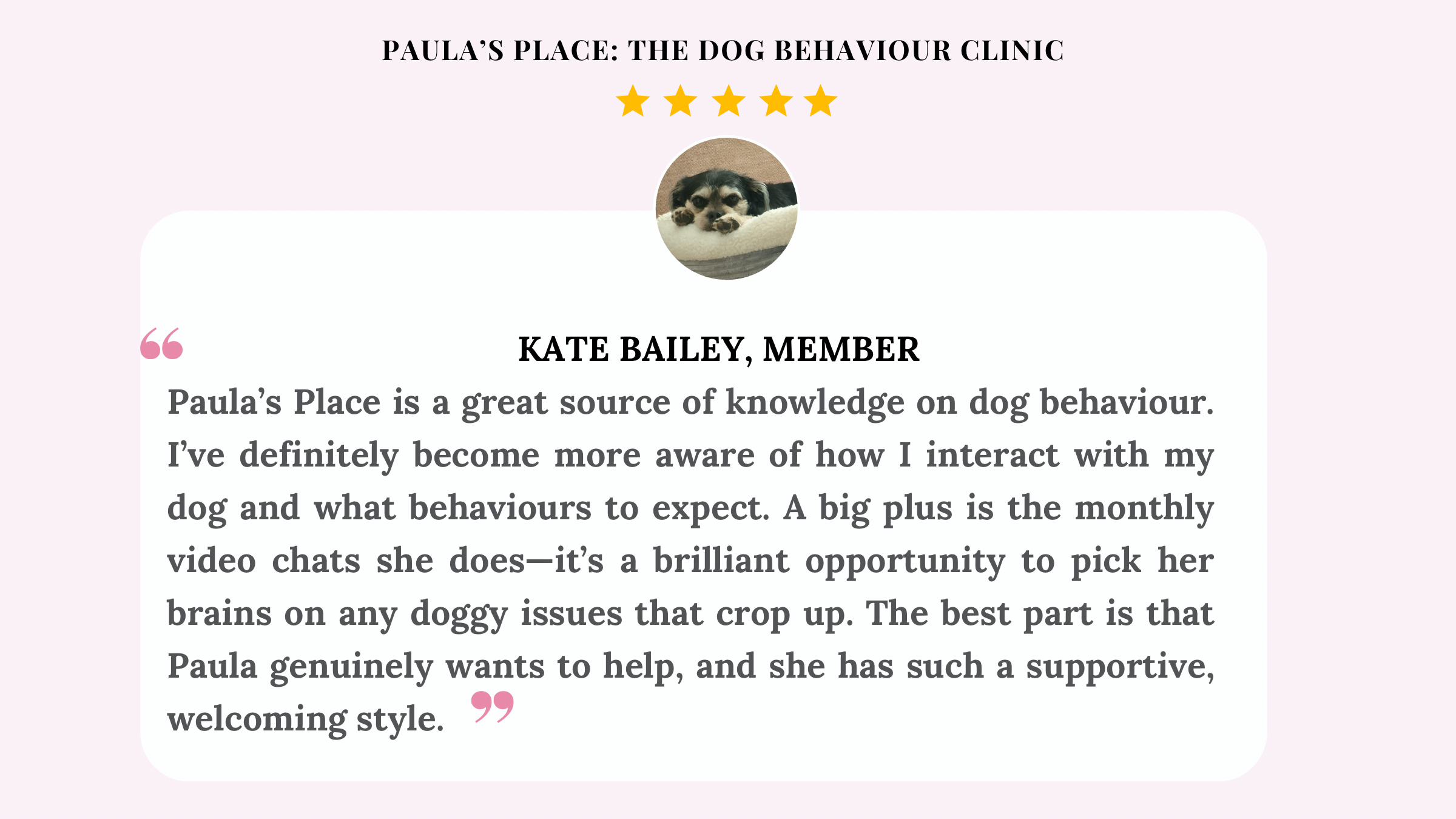
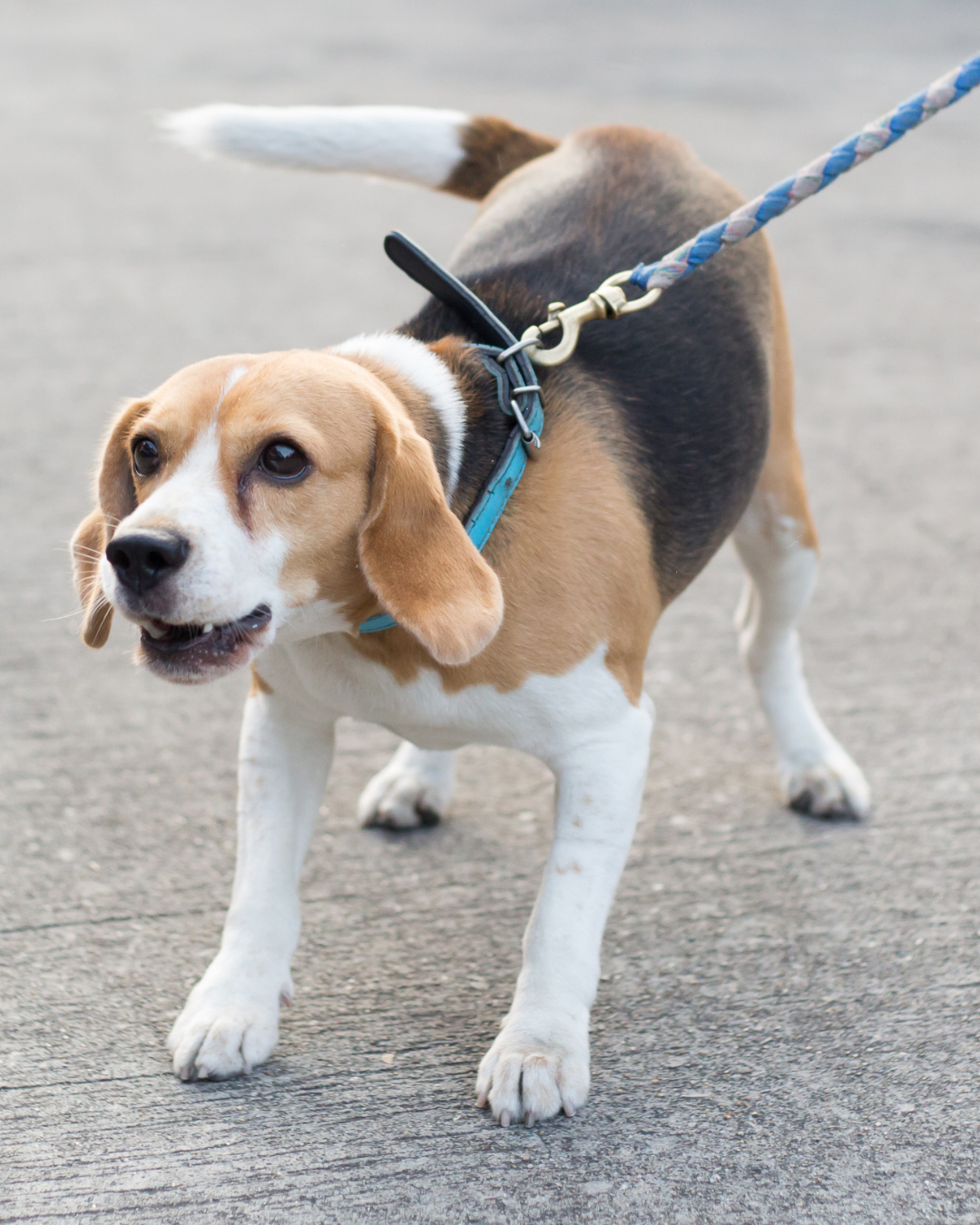
Reactivity is not a diagnosis. It is a behavioural response.
Two dogs can show almost identical barking or lunging for completely different reasons: fear, frustration, anxiety, over-arousal, pain or discomfort, previous learning, social experiences — or a combination of factors.
Before we decide how to change behaviour, we first need to understand what is driving it.
START THE REACTIVITY RESET — £14
14 days for £14
A structured online programme created by Clinical Canine Behaviourist Paula O’Sullivan to help you understand your dog’s reactivity and begin making meaningful, ethical behavioural change.
The internet is full of advice about what to do when a dog reacts. Far less attention is given to the question that matters most:
Why is the reaction happening?
Barking and lunging are behaviours, but they do not tell us the underlying cause. If we only try to stop the visible reaction, we risk treating the symptom rather than understanding the emotion or motivation underneath it.
Why does my dog react?
What is dog reactivity?
Dog reactivity is an intense behavioural response to a trigger or situation. It may include barking, lunging, growling, staring, freezing, pulling towards or away, vocalising, fixation or becoming unable to disengage.
Reactivity does not automatically mean aggression, and it does not tell us whether a dog is fearful, frustrated, anxious, over-aroused or struggling for another reason. That is why every reactive dog should not be treated with the same training plan.
Understand the root cause — explore fear, frustration, anxiety, arousal, previous learning, social experience and physical discomfort.
Identify your dog’s triggers — move beyond broad labels such as “dogs” or “people” and notice the specific contexts that matter.
Find your dog’s threshold — understand how distance, intensity, duration, environment and previous events affect coping.
Read the signals before the explosion — recognise earlier changes in body language, arousal and behaviour.
Understand trigger stacking — learn why your dog may cope one day and react much sooner on another.
Use distance effectively — understand why creating space is not failure and can create the conditions needed for learning.
Understand behaviour modification — learn the principles behind counterconditioning and systematic desensitisation.
Know when more investigation is needed — recognise when pain, health concerns or severe behaviour may need veterinary or individual behavioural assessment.
What you will learn
This is not about simply stopping the barking
Of course we want the explosive reactions to reduce, but suppressing the outward behaviour is not the same as changing the underlying response. If a dog is frightened, we want to help change how they feel. If they are frustrated, we need to understand what is creating that frustration. If something hurts, training alone is not the answer.
Behaviour is communication. Connection, not correction.
Short, digestible 5 minute video lessons
Behavioural science explained clearly
Practical exercises you can apply to your own dog
Online access wherever you live
Posters, worksheets and resources to document progress
Work at your own pace and revisit lessons whenever you need them
Short lessons. Big concepts. Real-life application.
When you join the Reactivity Reset, you also become part of the Dogs by Paula behaviour community.
• Structured Reactivity Reset lessons with a clear pathway through the foundations of behaviour modification.
• Direct access to Paula through the platform, with opportunities to ask questions.
• Free live Q&A sessions where Paula answers member questions and explores common behavioural problems.
• Free guest expert sessions covering areas relevant to canine behaviour, health and wellbeing.
• Discounted online consultations with Paula if you need more individual support.
• Continued supporting videos, PDFs and educational resources.
You are not just buying a course
Why I am launching it at £14
I created Dogs by Paula because I want evidence-led behaviour support to be more accessible.
Working with me individually in London currently costs £350 for my in-person behavioural programme. That personalised level of support is appropriate for some dogs, but I know that not everyone lives within travelling distance of me — and not everyone is in a position to invest in one-to-one behavioural work.
Dogs by Paula allows me to reach many more dogs and owners. The Reactivity Reset is designed for people who want qualified, reliable guidance wherever they live, or who need a more affordable place to begin.
For this introductory launch, you can access the Reactivity Reset for £14 for 14 days and learn the same behavioural principles that underpin my professional work.
It is not a replacement for individual assessment where that is needed. It is an accessible, expert-led place to start.
START THE REACTIVITY RESET
— 14 DAYS FOR £14
• Dogs who bark or lunge at other dogs
• Dogs who react to unfamiliar people
• Dogs who struggle when dogs approach on lead
• Dogs who become fixated on triggers
• Dogs who find busy environments overwhelming
• Dogs who appear fearful, anxious or frustrated around particular triggers
• Dogs whose reactions seem to be getting worse
• Owners who simply do not yet understand why their dog is reacting
You do not need to know what type of reactivity your dog has before joining. Helping you understand the behaviour is part of the Reset.
Who is the Reactivity Reset for?
• A promise to “fix” a reactive dog in 14 days
• A one-size-fits-all training plan
• A punishment-based or dominance-based programme
• A substitute for veterinary care or individual behavioural assessment when either is needed
Complex behaviour takes time. The 14-day Reset is about changing the way you understand and approach the behaviour: recognising patterns, understanding thresholds, identifying likely emotional drivers and putting appropriate foundations in place.
What the Reactivity
Reset is not
When you join the Reactivity Reset, you also become part of the Dogs by Paula behaviour community.
• Structured Reactivity Reset lessons with a clear pathway through the foundations of behaviour modification.
• Direct access to Paula through the platform, with opportunities to ask questions.
• Free live Q&A sessions where Paula answers member questions and explores common behavioural problems.
• Free guest expert sessions covering areas relevant to canine behaviour, health and wellbeing.
• Discounted online consultations with Paula if you need more individual support.
• Continued supporting videos, PDFs and educational resources.
You are not just
buying a course
Trusted by dog owners and veterinary professionals


Frequently asked questions about dog reactivity
-
No. Reactivity describes an intense behavioural response to a trigger; it does not tell us the underlying motivation. A dog may react because they are fearful, frustrated, anxious, over-aroused or for several interacting reasons.
-
There is no single cause. Barking and lunging can occur because of fear, frustration, anxiety, previous learning, arousal, pain or a combination of factors. Context, body language and the distance at which your dog can cope all help us understand the likely cause.
-
Threshold is the point at which a trigger becomes sufficiently intense that a dog begins to struggle to cope effectively. Distance, duration, environment and previous experiences can all influence a dog’s threshold.
-
Trigger stacking describes the cumulative effect of multiple stressful or highly arousing experiences. Several manageable events occurring close together can leave a dog with less capacity to cope with the next trigger.
-
Counterconditioning aims to change the emotional response associated with a trigger by pairing it systematically with a different outcome. In reactive-dog work it is commonly used alongside carefully controlled exposure.
-
Physical discomfort can affect behaviour and tolerance. Sudden behavioural change, unusual sensitivity or escalating behaviour may warrant discussion with your vet rather than assuming the problem is solely a training issue.
-
Many dogs can make meaningful progress with appropriate management and behaviour modification, but outcomes depend on the individual dog and the factors driving the behaviour.
-
No. The programme is designed to give you the knowledge, assessment framework and foundations to begin working with your dog appropriately. Behaviour modification itself may take longer with consistency.
-
Individual assessment is particularly important where there has been a bite or serious aggression, behaviour is severe or rapidly escalating, there has been sudden behavioural change, pain or illness may be involved, or you need a personalised behaviour-modification programme.
-
Maybe you have spent months trying to stop the reaction. I would like you to start by understanding it.
When we stop asking “How do I make my dog stop doing this?” and start asking “Why does my dog need to do this?”, we can approach behaviour very differently.
Meet Paula
Paula O’Sullivan
Clinical Canine Behaviourist & Advanced Level Dog Trainer
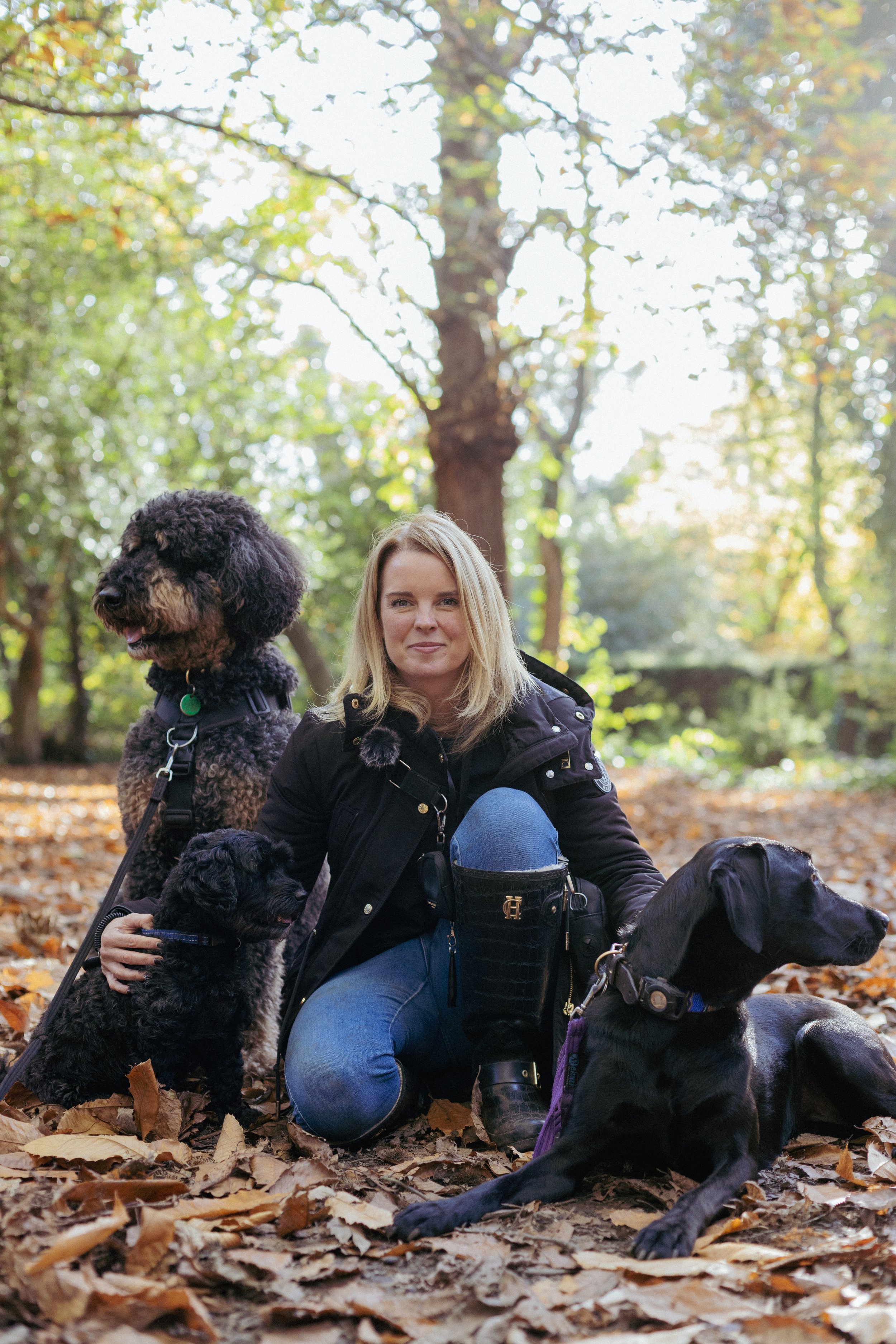
I’m Paula, founder of Dogs by Paula and Walkies & Waggietails. For more than a decade I have worked professionally with dogs experiencing behavioural and training difficulties, while teaching owners how to better understand the dogs they live with.
• Degree in Canine Behaviour & Advanced Level Training
• Postgraduate Diploma in Applied Animal Behaviour
• 13+ years practising in canine behaviour
My work includes dogs experiencing reactivity, anxiety, aggression, fear, resource guarding, territorial behaviour and other complex behavioural problems. Where appropriate, cases may also involve liaison with veterinary and other relevant professionals.
I don’t simply want to tell you what to do. I want you to understand why you’re doing it.
About Dogs by Paula
Dogs by Paula is the online canine behaviour and education platform created by Paula O’Sullivan, Clinical Canine Behaviourist and founder of Walkies & Waggietails.